MQ silicone resin is a type of organosilicon polymer built from M monofunctional and Q tetrafunctional siloxane units. It features high thermal stability, excellent weather resistance and good compatibility with many silicone materials. This resin is widely used as tackifier, reinforcing filler and film-forming agent in coatings, adhesives and release liners.
Described below in three sections: Application Scenarios, Selection Methods, Common Buyer Questions, distinguishing the three mainstream MQ silicone resins.
Basic Concept: MQ silicone resin is a cage-type organosilicon resin composed of monofunctional M units (R₃SiO₁/₂) and tetrafunctional Q units (SiO₄/₂). Classified by side substituent groups, the main grades include methyl MQ silicone resin, vinyl MQ silicone resin, and methyl hydrogen-containing MQ silicone resin. They serve as core reinforcing/tackifying resins for addition-cure silicone systems.
Features: Only methyl groups in structure, chemically inert, does not participate in hydrosilylation reaction. Main functions: reinforcement, tackification, temperature resistance, improved light transmittance and reduced internal stress.
Liquid/solid silicone rubber: Reinforcement for transparent addition-cure and room-temperature vulcanized silicone rubber to enhance tear strength, hardness and transparency.
Pressure-sensitive adhesives (core raw material for silicone PSA): Silicone PET protective films, PI high-temperature tapes; improves peel strength, cohesive strength and high-temperature aging resistance.
Coatings/release agents: High-temperature resistant silicone coatings and barrier coatings to boost weather resistance and hydrophobicity.
Defoamers: Defoaming synergist to improve thermal stability of defoamers.
Others: Filler for LED encapsulant, tackifier for potting compounds.
Features: Vinyl groups (-CH=CH₂) on molecular chains, capable of hydrosilylation reaction. It can crosslink and cure with hydrogen-containing silicone oil, incorporating the resin into crosslinked network without migration.
High-transparency addition-cure silicone potting compounds, LED encapsulants, lens adhesives: Reinforcement while participating in crosslinking; improves strength, aging resistance and transmittance of cured products and reduces resin migration.
Liquid Silicone Rubber (LSR): Reinforcement for transparent liquid silicone rubber for high-end products.
Silicone gels: Improves mechanical properties of gels and reduces oil bleeding.
Electronic adhesives: High-temperature resistant silicone adhesives for electronics.
Special pressure-sensitive adhesives: Crosslinkable silicone PSA for better solvent resistance and thermal stability of adhesive layers.
Features: Contains silicon-hydrogen bonds (Si-H), acting as crosslinker for hydrosilylation. It can cure with vinyl silicone oil / vinyl MQ via addition reaction. With MQ backbone, it combines both reinforcement and crosslinking functions.
Addition-cure silicone rubber, LED encapsulants: Self-reinforcing crosslinker. Can partially replace conventional hydrogen-containing silicone oil; cured parts have higher strength and less oil bleeding.
Silicone coatings, three-proof coatings: Crosslinking component for transparent high-temperature resistant coatings.
Silicone gel systems: Adjust gel hardness and viscoelasticity.
Paper/textile waterproofing agents: Dehydrocrosslinking via Si-H bonds to form hydrophobic coatings.
Blended systems: Formulated together with vinyl MQ for one-part or two-part addition-cure silicone systems.
Quick summary for application selection:
Methyl MQ: only for reinforcement & tackification, not involved in curing
Vinyl MQ: carries double bonds, works as matrix/reinforcer and takes part in curing
Methyl hydrogen-containing MQ: carries Si-H bonds, integrated crosslinker & reinforcer
M/Q molar ratio: The most critical parameter. Higher M/Q = lower molecular weight, lower viscosity and better flexibility. Lower M/Q = higher hardness and greater brittleness. Typical MQ ranges from 0.6~0.9.
Solid content: Solvent-borne (toluene/xylene) or solvent-free bulk type. Solvent-borne grades are widely used for PSA; solvent-free bulk MQ is preferred for LED potting and liquid silicone rubber to avoid bubble from solvent residue.
Molecular weight Mn/Mw: High molecular weight leads to high viscosity and poor compatibility; excessively low molecular weight causes migration and oil bleeding.
Volatile content: Strictly controlled for high-temperature products to prevent foaming under heat.
Appearance: Transparent or semi-transparent, no turbidity or white precipitate; precipitate indicates hydrolysis and degradation.
Choose this grade when no crosslinking reaction is required and only reinforcement/tackification is needed.
For silicone pressure-sensitive adhesives, focus on M/Q ratio, solid content and hydroxyl content. Minor silanol groups improve substrate adhesion.
For high-temperature solvent-free adhesives, solid bulk MQ is preferred to eliminate solvent.
Note: Methyl MQ has no reactive groups, cannot cure independently and acts only as reinforcing filler.
Select only for platinum-catalyzed hydrosilylation addition systems.
Key indicator: vinyl content (Vi%). Higher vinyl content brings more crosslinking sites, higher hardness of cured products. Low vinyl grades suit soft adhesives/gels; high vinyl grades suit hard encapsulants.
Check uniformity of vinyl distribution; locally excessive vinyl causes uneven curing and cracking.
Select grades compatible with vinyl silicone oil to avoid phase separation.
Used in hydrosilylation systems as crosslinking component, matched with vinyl silicone oil / vinyl MQ.
Core indicator: hydrogen content (wt% H). Higher hydrogen content provides higher crosslinking activity and higher hardness at the same dosage.
Distinguish side-hydrogen MQ and terminal-hydrogen MQ; side hydrogen shows higher reactivity.
Control molar ratio of Si-H / Vi (hydrogen groups to vinyl groups), normally H/Vi = 1.0~1.5. Improper ratio leads to incomplete curing or brittleness.
Storage stability: Hydrogen-containing MQ can dehydrogenate and produce gas when exposed to water or alcohols; check for stabilizer when purchasing.
Substrate matching: Methyl MQ preferred for PSA on PI film, PET and metal substrates; combination of vinyl MQ + hydrogen-containing MQ for electronic transparent encapsulation.
Processing technology: Solvent-borne for coating; solvent-free for potting, molding and injection.
Compliance requirements: Low heavy metal and low ion (low Na⁺/K⁺) grades for food contact and LED optical components.
Q1: Can methyl MQ silicone resin cure and form film alone?
A: No. Methyl MQ has no reactive groups. It only disperses in silicone systems for reinforcement and tackification and must be used with silicone rubber matrix.
Q2: Why oil bleeding occurs after adding methyl MQ?
A: Too high M/Q ratio, too low molecular weight leading to migration of small-molecule MQ; or excessive dosage and insufficient compatibility with base silicone oil.
Q3: Bubbles appear after coating solvent-borne methyl MQ?
A: Mismatched solvent volatilization rate or low solid content plus rapid temperature rise during baking. Segmented baking is recommended.
Q4: Will methyl MQ affect transparency?
A: Qualified high-transparency MQ will not. Turbidity and whitening happen if resin hydrolyzes to form silica precipitate.
Q1: What is the difference between vinyl MQ and ordinary vinyl silicone oil?
A: Vinyl silicone oil has linear structure; vinyl MQ is cage branched structure. Vinyl MQ delivers much stronger reinforcement, better hardness, heat resistance and tear resistance after curing, yet usually with higher viscosity.
Q2: Partial incomplete curing of platinum-cured silicone after adding vinyl MQ?
A: ①Uneven vinyl distribution; ②Inhibitor impurities in resin; ③Excessive moisture consuming active sites in advance; ④Platinum catalyst poisoning.
Q3: Does more vinyl MQ addition produce harder adhesive?
A: Within reasonable dosage range, yes. But overdose sharply increases system viscosity and leads to brittle cured product prone to cracking.
Q4: Storage requirement of vinyl MQ?
A: Seal and store at room temperature away from light. It is relatively stable, but long-term high temperature triggers side reactions and viscosity rise.
Q1: Difference between methyl hydrogen-containing MQ and ordinary linear hydrogen-containing silicone oil?
A: Conventional hydrogen-containing silicone oil is linear; hydrogen-containing MQ adopts cage structure, with inherent reinforcing effect. Cured articles have higher strength and less oil bleeding, but generally higher viscosity.
Q2: Bubbles generated after compounding adhesive with hydrogen-containing MQ?
A: Si-H reacts with water/alcohol to produce hydrogen gas; caused by water in raw materials, alcohol contamination or deteriorated hydrogen-containing resin.
Q3: How to control H/Vi ratio?
A: Normally 10%~50% excess hydrogen, H/Vi=1.1~1.5. Insufficient hydrogen causes tacky incomplete cure; excessive hydrogen results in brittle adhesive and cracking after long-term aging.
Q4: Can hydrogen-containing MQ be directly mixed with methyl MQ?
A: Physical blending is feasible; methyl MQ only serves as reinforcer. However, vinyl component plus platinum catalyst must exist in the system, otherwise curing cannot happen.
Q1: What is the effect of hydroxyl groups in MQ silicone resin?
A: Residual silanol groups improve substrate adhesion. But excessive hydroxyl groups cause condensation at high temperature, viscosity increase and poor storage stability.
Q2: How to choose between solvent-borne MQ and solvent-free bulk MQ?
A: Solvent-borne: low viscosity, easy coating, mainly for pressure-sensitive adhesives. Solvent-free: no solvent volatilization, suitable for electronic potting and LED optical adhesives with low bubble risk, yet higher viscosity.
Q3: What is the temperature resistance of MQ silicone resin?
A: Thermal weight loss of neat methyl MQ occurs at around 400°C. Finished cured silicone products have long-term service temperature of 200~250°C.
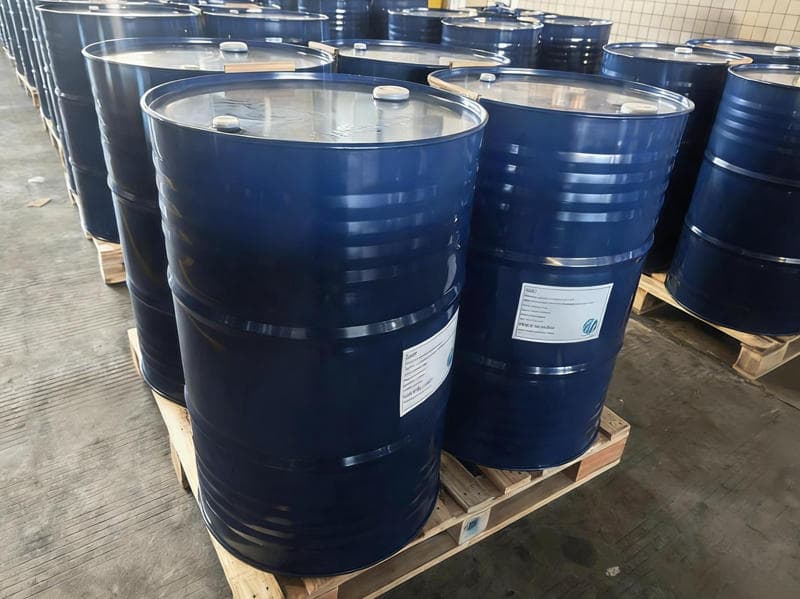 MQ Silicone ResinsMQ Silicone Resins
Vinyl Q resin dispersion; MQ vinyl resin in vinyl polymer; Mehylvinyl MQ silicone resin in vinyl silicone fluid.
MQ Silicone ResinsPolymethylsilsesquioxane (spherical silicone resin) micro powder is a kind of polymethylsilsesquioxane produced by hydrolysis and polymerization of organosilicone as raw material. It is a spherical micron-sized silicone resin powder, also known as silicone microspheres.
MQ Silicone ResinsThe reaction products of trimethylsiloxy-terminated polysilicates, methyl MQ silicone resins, sodium silicate with trimethylchlorosilane and isopropanol.
MQ Silicone ResinsMQ Silicone ResinsMQ Silicone ResinsMQ Silicone ResinsMQ Silicone ResinsOctaphenylsilsesquioxane; POSS; Polyhedral Oligomeric Silsesquioxane; Polyphenylsilsesquioxane
