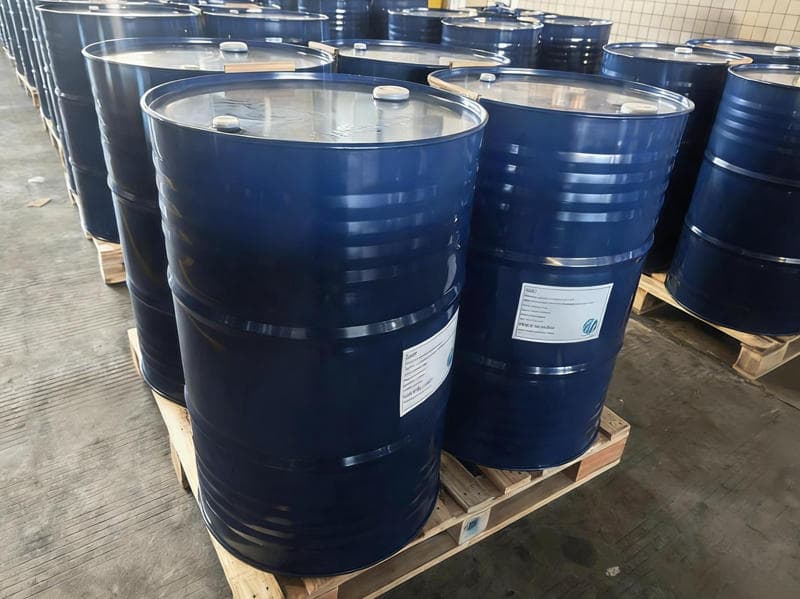
Silicon chemistry enters crop protection at two points: in the spray tank, where silicone surfactants help a spray cover the leaf, and in the factory, where silylating agents are used to synthesise the active ingredients themselves.
Trisiloxane surfactant adjuvants
Water beads on a waxy leaf. Trisiloxane surfactants lower the surface tension of a spray so far that droplets spread across the leaf in seconds — "superspreading" — and can enter the stomata, which improves coverage and uptake and reduces losses when it rains soon after spraying. These surfactants are made by grafting a polyether onto heptamethyltrisiloxane through its single Si–H bond; the choice of polyether sets the balance between spreading, wetting and water solubility.
Synthesis of active ingredients
Silazanes such as heptamethyldisilazane and tetramethyldivinyldisilazane protect reactive hydroxyl and amine groups during multi-step synthesis of pesticides, veterinary drugs and pharmaceuticals, and are removed cleanly once the step is done.
What to check
- Si–H content and purity of heptamethyltrisiloxane, which govern the yield and quality of the grafted surfactant.
- Residual moisture for silazanes, which react with water.
For a recommendation for your formulation, a COA, an SDS or a quotation, contact our technical sales team.